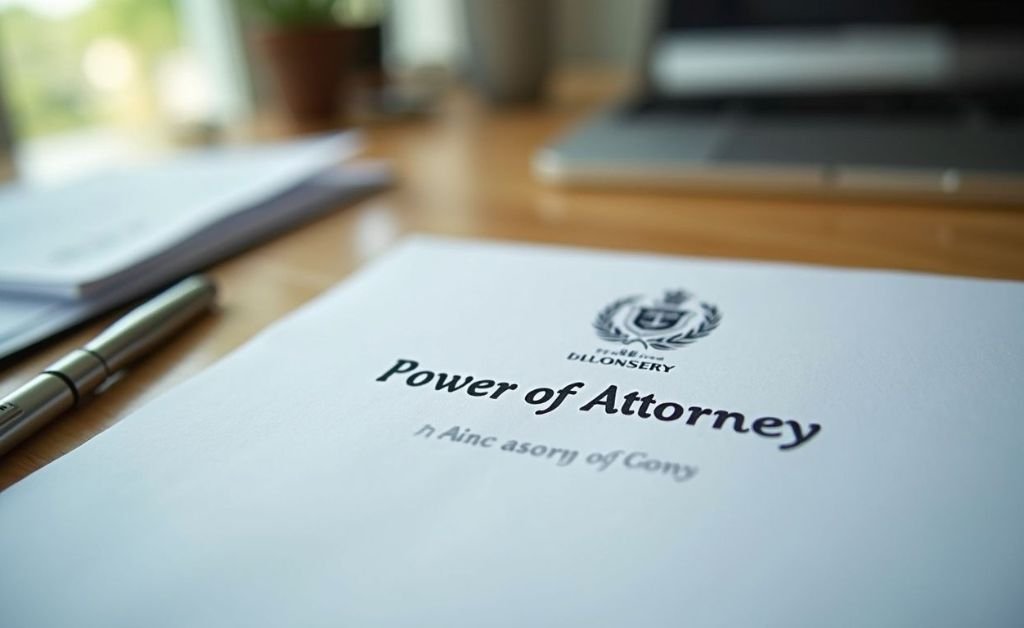
Getting a Power of Attorney attested in the UAE can feel tricky, especially if you are not sure where to start. Many people go through this process every year for their family or business needs.
It helps to know that you are not alone. In this post, we will guide you step by step and show which documents to prepare for easy document attestation.
Keep reading to make the whole process much easier!

What is Power of Attorney Attestation in the UAE?
Power of Attorney attestation in the UAE is the official way to prove a Power of Attorney document is real and legal. We use this process when we want someone else to act for us in legal, business, or property matters.
The UAE asks for attested documents, so their offices know everything is true and trusted.
We follow steps such as notary public checks, home country verification, Ministry of Foreign Affairs stamping, and then using consular services or Embassy services if needed. This proves our Power of Attorney holds legal authority both locally and internationally.
“Attestation gives legal protection—for us and those who rely on our documents.” Such certification makes sure our wishes are clear in any deal we make within the UAE system.
Steps to Attest a Power of Attorney in the UAE
We’ve experienced the practical steps to get a Power of Attorney verified in the UAE. It’s not as challenging as you might think. These are the measures we took to ensure proper execution.
- Compose your POA document. Confirm that it precisely communicates your intents. Seek professional legal advice if you’re uncertain.
- Translate your POA document into Arabic as it’s a necessity here in the UAE. We discovered a certified translator to handle this task.
- Present your POA document along with its Arabic translation to a notary public for affirmation. They ascertain it’s accurate and place their stamp on it.
- Now, carry your authenticated POA to the Ministry of Foreign Affairs (MOFA) for advanced verification. They put their official stamp, signifying it’s formally acknowledged by the UAE government.
- If you plan to use this POA from another country, there’s an additional step before MOFA; confirm its authenticity in your native country. Typically, this involves presenting it to a formal institution, such as your nation’s foreign affairs department or embassy services, then having the UAE embassy in your homeland confirm its authenticity.
This procedure was effective for us and helped to make sure that our Power of Attorney was correctly verified and accepted here in the UAE without any issues.
Documents Required for Power of Attorney Attestation
Getting your Power of Attorney attested in the UAE needs a bit of preparation. We have to make sure we have all the right documents before starting. Here’s what we need:
- Original Power of Attorney document – This is the main paper where we give someone else the legal right to act on our behalf. It must be complete and clear.
- Passport copy of the principal – The person giving the power must provide a copy of their passport. It helps verify identity.
- Passport copy of the attorney – Similarly, the person getting the power also needs to provide their passport copy.
- Visa page copies – If either party lives in the UAE, copies of their visa pages are needed to prove residency status.
- Original identification documents – This could include national ID cards or any government-issued photo ID for both parties.
- Two photographs – Both the principal and attorney need to submit recent passport-sized photos.
- Document attestation from home country – Before it comes to the UAE, our document needs verification from our home country’s relevant authorities, like notary public or foreign affairs office.
- UAE Embassy authentication in your home country – After getting attested at home, it then needs validation by the UAE Embassy located in our home country.
- Foreign Affairs attestation in the UAE – Once in the UAE, it goes through one last step of verification by the Ministry of Foreign Affairs.
So, these steps cover everything from legal authorization back home to final verification here in Dubai. Keeping these documents ready keeps us on track without hiccups!
Conclusion
We have shared how to get a Power of Attorney attested in the UAE. It’s a simple process if we follow the steps. We need to gather our documents and visit the right authorities, like the notary public and embassy services.
This will help ensure everything is legal and valid for use in our home country or abroad. Attesting our Power of Attorney can make things easier when handling important matters!
FAQs
1. What is a Power of Attorney in the UAE?
A Power of Attorney is a legal document that allows someone to act on behalf of another person. It gives them the authority to make decisions, sign documents, or manage affairs for that person.
2. How do I get my Power of Attorney attested in the UAE?
To get your Power of Attorney attested in the UAE, you need to visit a notary public first. They will verify your identity and witness your signature. After that, take it to the relevant government office for official stamping.
3. Do I need any specific documents for attestation?
Yes, you will need your original Power of Attorney document along with copies of valid identification like your passport or Emirates ID; sometimes additional proof may be required depending on local rules.
4. How long does it take to get a Power of Attorney attested?
The time can vary based on where you go for attestation; generally, it takes one day if all documents are in order but might take longer during busy times or if there are issues with paperwork.