

Understanding Visa and Residency Requirements
We need to follow both local and federal laws in the UAE, which can feel confusing at the beginning.
Each Emirate has its own rules, so moving from Abu Dhabi to Dubai may mean we face new legal requirements.
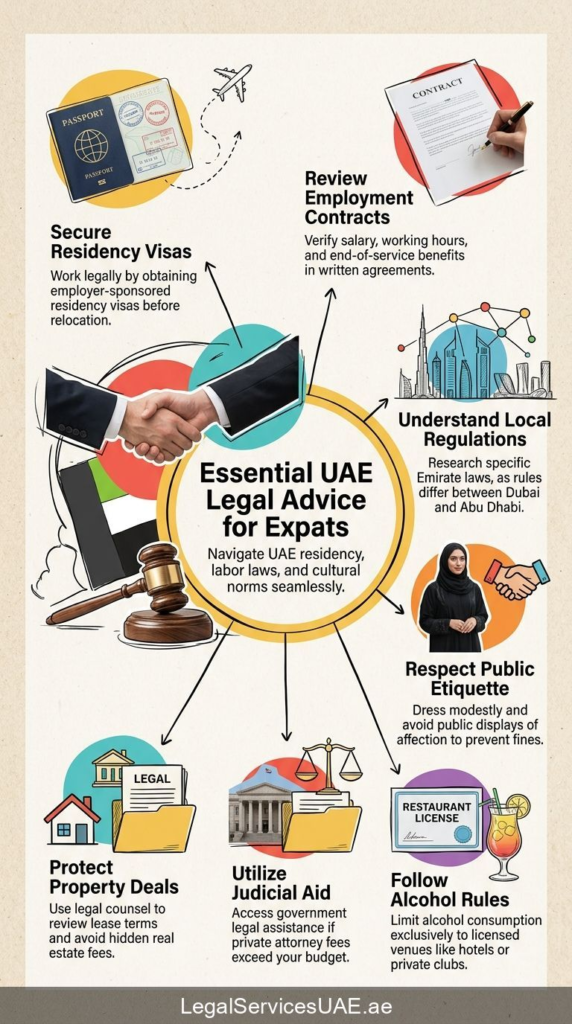
The main thing for us as expatriates is a residency visa.
Most of us get our residency visas because an employer sponsors us for work.
This makes employment law and labor contracts very significant during our move.
Getting a valid visa lets us live and work here legally.
Many expats use immigration law firms or legal aid if things get tricky with paperwork, family members, or renewals.
For those who cannot pay high legal fees, the UAE provides some judicial help too, making it easier for families trying to settle down together under clear rules set by the government.
We must study each step of the visa application process before coming; this keeps surprises away and helps everyone enjoy life in the Emirates safely within all residency regulations.
–
–
Reviewing Employment Contracts and Labor Laws
In the UAE, we often see that employment contracts are very different from those in other places. Every expat must sign a written contract before starting any job here.
These documents set out our salary, work hours, and end-of-service benefits.
The law also explains how many days off we get per year and what happens if someone gets fired or wants to resign.
We need to know these details because they protect us at work.
We always check both local laws and federal laws since rules can change between Emirates like Dubai and Abu Dhabi.
For example, as of 2024, the Ministry of Human Resources and Emiratisation oversees most labor is relevant for foreigners across the UAE.
Some friends have told us about facing problems with unpaid salaries or unclear working hours; getting legal advice early made things easier for them.
In case anyone cannot pay expensive lawyer fees, judicial aid exists, which helps expats get legal support when needed.
Understanding your employment contract is just as important as finding a good job.
Navigating Public Behavior and Cultural Norms
UAE laws about public behavior can feel strict to many expatriates.
Local and federal rules apply everywhere in the Emirates, including Dubai.
Holding hands or showing affection in public is uncommon and can be against the law.
Dressing modestly keeps us out of trouble; both men and women should cover shoulders and knees when visiting malls or government offices.
All UAE residents must also follow rules about alcohol use.
Drinking is only allowed in licensed places, like hotels or private clubs.
Taking photos of people without permission breaks privacy laws here, so we always ask before clicking a picture.
Loud arguments or rude hand signs are considered serious offenses under UAE law as well.
Public respect helps us avoid legal problems, fines, or worse—deportation from the country.
The legal system expects expatriates to learn these cultural norms before moving for work or residency under UAE residency regulations and employment law.
Legal Support for Property and Real Estate Transactions
Buying or renting a home in the UAE can feel confusing.
Both local and federal property laws apply across all Emirates, so we need good legal support before signing any deals.
Many expats use legal consultation to review contracts, check for hidden fees, and make sure their rights as buyers or tenants stay protected under the UAE’s property law.
This helps us avoid fraud or mistakes that may cost money later.
We see that Dubai’s housing rules can differ a lot from what we know back home.
Legal aid proves helpful if we face disputes with landlords or developers.
If someone cannot afford large legal fees, the UAE government offers judicial help for those who qualify.
Understanding these steps protects us while dealing with big purchases like real estate, rental agreements, deposit returns, and government registration rules tied to residency regulations.
Using proper expat legal services keeps transactions smooth and secure for families moving here for work or settling down longer-term.
Conclusion and Next Steps
We hope this guide helps every expat moving to the UAE.
Understanding local laws is key for a smooth transition.
We should always seek legal advice to avoid surprises. Starting our new life in Dubai can be exciting, so let’s stay informed and prepared.
Together, we can make this journey successful!
FAQs
1. What legal advice do expats need when moving to the UAE?
Expats should understand visa requirements, residency laws, and employment regulations.
It’s important to know how local laws affect living and working in the UAE.
2. How can I find a lawyer in the UAE?
You can search online for lawyers who specialize in expat issues; check reviews or ask other expats for recommendations.
Finding someone familiar with local laws is key.
3. Are there any specific laws that expats should be aware of?
Yes, expats should know about property ownership rules, labor laws, and family law matters like marriage and divorce.
Understanding these helps avoid legal troubles.
4. What documents do I need to prepare before moving?
Prepare your passport, visa application forms, job contracts (if applicable), and any necessary certificates, such as marriage or birth certificates.
Having these ready makes your move smoother.